
Sewer Scope Inspections in Durango, Cortez and Southwest Colorado
A clean house can hide a bad sewer line. I run a camera from the cleanout to the main and send you the video with a written summary. The stills below are from real inspections.
What the camera finds
Most of these can be repaired. Knowing about them before your objection deadline is where the value is.
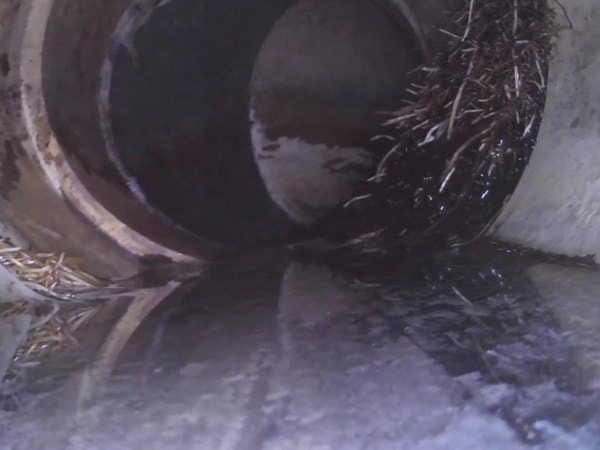
Roots at a joint
About 4 in 10 homes built before 1960Roots find a joint or a crack and grow until they catch paper and waste. A plumber can often clear them. They also show the joint is open.
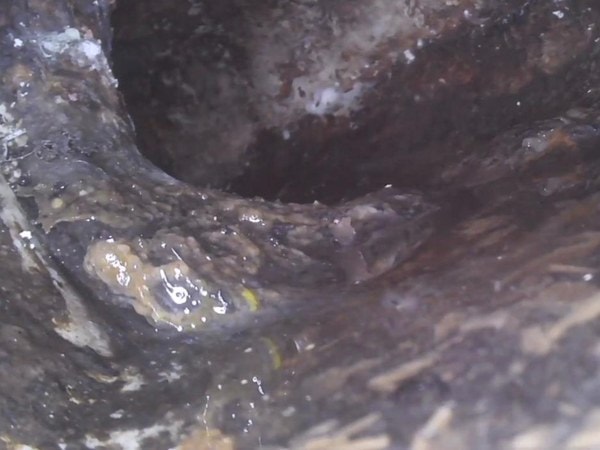
Buildup and standing water
At a clay elbow before the mainOld fittings catch waste where the pipe turns or steps down. Standing water and buildup like this are what lead to backups.
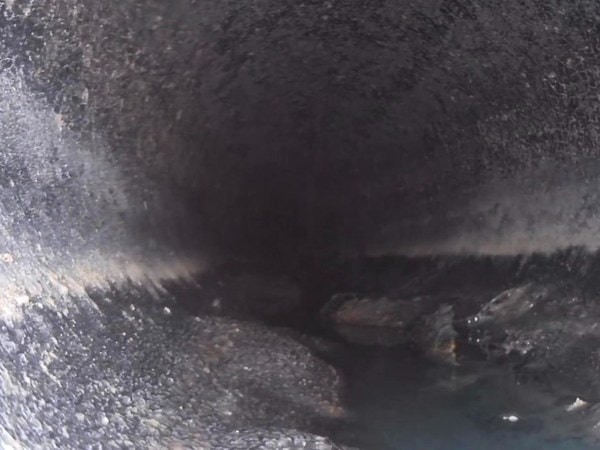
Orangeburg and clay pipe
About 1 in 3 homes built before 1960Orangeburg is a tar-and-fiber pipe that flattens and delaminates with age. I have found it at homes built from the late 1940s to the early 1970s, and not at any home built since 1980.
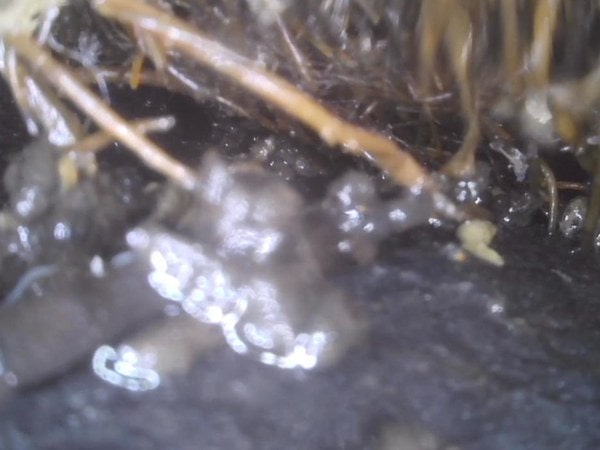
Heavy root growth
Camera stopped hereRoots can fill a pipe until the camera cannot pass. The video and the footage counter show a plumber exactly where.
What a sewer scope tells you
The line is yours to the main
The waste line is the owner's responsibility all the way to the main sewer, and repairs under a yard, driveway or street are expensive.
Newer homes are worth scoping too
New pipe can still carry problems from the day it went in. More than 1 in 3 lines I scope at homes built since 2000 have a belly. I also find pipe dented against a rock in the trench, and on one recent scope a cleanout that was never connected and was full of soil.
How I scope a line
- Certified. I am an InterNACHI Certified Sewer Scope Inspector, and a former general contractor. Often I can tell you what a repair involves, not only that something is wrong.
- You get the video. The report links to the full video with a written summary of what I saw and where.
- You get my read first. I tell you what I saw and where it is, and often what a repair involves. If it calls for work, the video and footage marks give a plumber a head start, and are often enough to price the repair.
Sewer scope questions
Is a sewer scope worth it on a newer house?
It often is. More than 1 in 3 lines I scope at homes built since 2000 have a belly, and I also find dented pipe and cleanouts that were never connected. A scope is the only way to see inside the pipe before you own it.
What do I get?
A link to the full camera video and a written summary of the pipe material, what I found and how far from the cleanout it was.
What if you find a problem?
You will know before your objection deadline, and I will tell you what I think it means. A plumber can often price the repair from the video, and that gives you a basis for negotiation with the seller.
Can I add a sewer scope to my home inspection?
Yes. Choose it when you schedule online.
Every number on this page comes from my own sewer scopes. They describe the lines I was hired to scope, not every line in town.