
Termite & WDO Inspections
What a WDO inspection covers
Termites, carpenter ants and wood-decaying fungi follow moisture and wood, not curb appeal. I inspect for active wood-destroying organisms and the conditions that invite them, document what I find in your inspection report, and — when the transaction calls for it — record insect findings on the industry-standard NPMA-33 form.
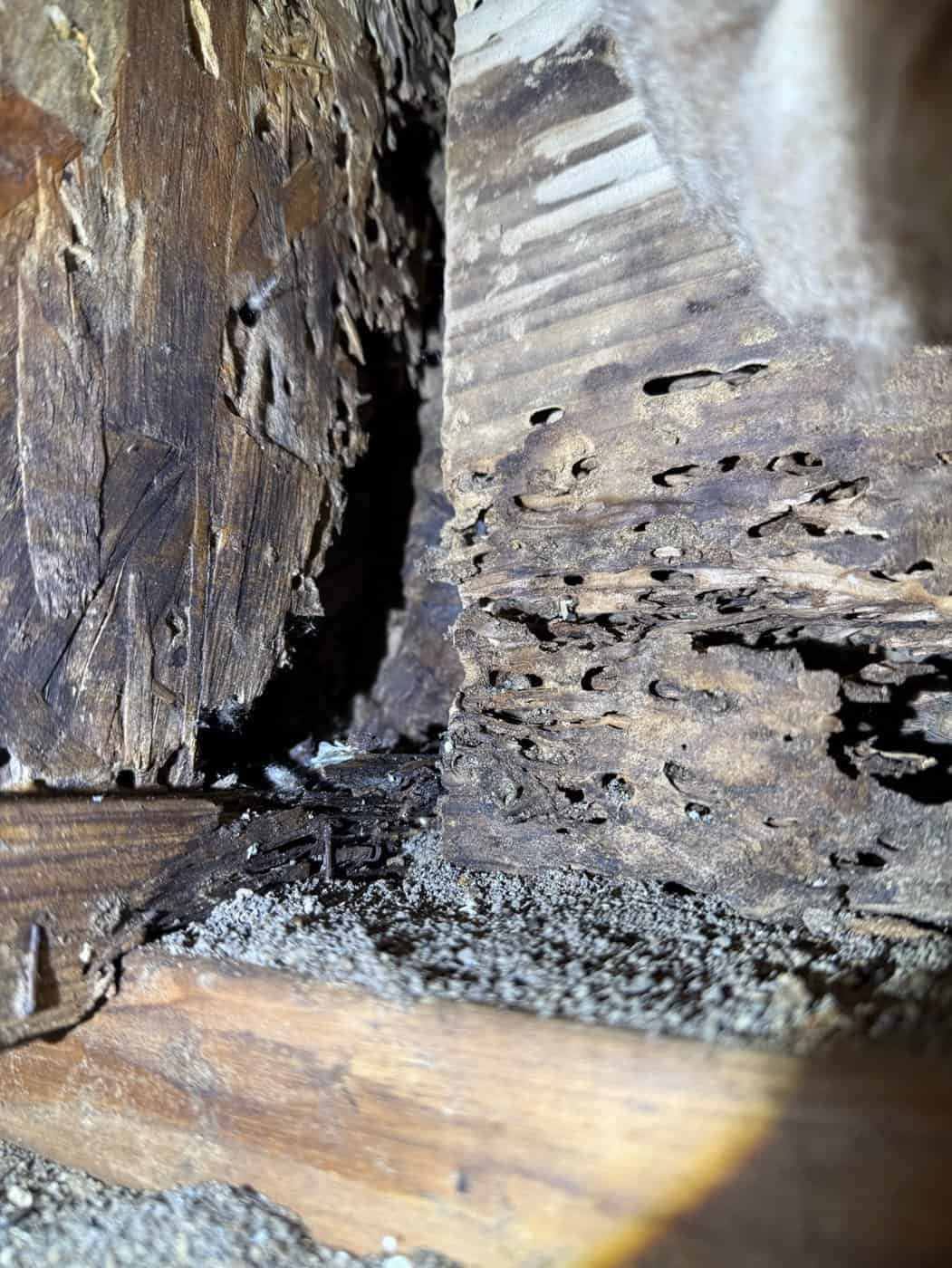
Active infestation and past damage — termite mud tubes, carpenter-ant galleries, and wood-decay fungus in framing, sills and subfloor.
The conducive conditions that let it start: earth-to-wood contact, crawlspace moisture, poor drainage, and decayed siding or trim.
A formal NPMA-33 Wood-Destroying Insect Report — the letter VA loans typically call for, and one some other lenders like to see before closing.

The NPMA-33 letter is free for veterans — with your inspection
If you’re buying with a VA loan, an NPMA-33 letter is usually part of getting to closing. Add it to your home inspection and it’s on me — a small way to say thank you for your service. The form itself documents wood-destroying insects; if I find wood-decay fungi, that goes in your inspection report.
When your home inspection is with me, the veteran’s NPMA-33 letter is free — one less appointment and one less line on your closing costs.
Southwest Colorado isn’t immune: I’ve found active wood-destroying insect and fungal activity in older homes in Cortez and Mancos and along the Animas River in Durango.
As a former general contractor, I don’t just flag the damage — I explain what it means structurally and what a sensible path to correction looks like.


